English
 Español

For professional painters weighing their options, a paint roller tray is better suited for flat, large-surface rolling jobs, while a bucket grid system excels in high-volume, continuous work where minimizing downtime matters most. Each tool has a distinct advantage depending on the job type, paint volume, and cleanup expectations. Understanding the differences in paint waste, cleaning effort, and workflow efficiency will help you make the right call on your next project.
What Is a Paint Roller Tray and How Does It Work?
A paint roller tray is a shallow, sloped container — typically molded from plastic or metal — designed to hold a small volume of paint for roller application. The ribbed ramp allows the painter to evenly load and distribute paint across a roller sleeve before applying it to a surface.
Most standard paint roller trays hold between 0.5 and 1 liter of paint, making them ideal for smaller sections of wall, trim work, or ceilings. They are widely available, inexpensive, and compatible with 9-inch rollers — the most common size used in residential and light commercial painting.
What Is a Bucket Grid System and How Does It Differ?
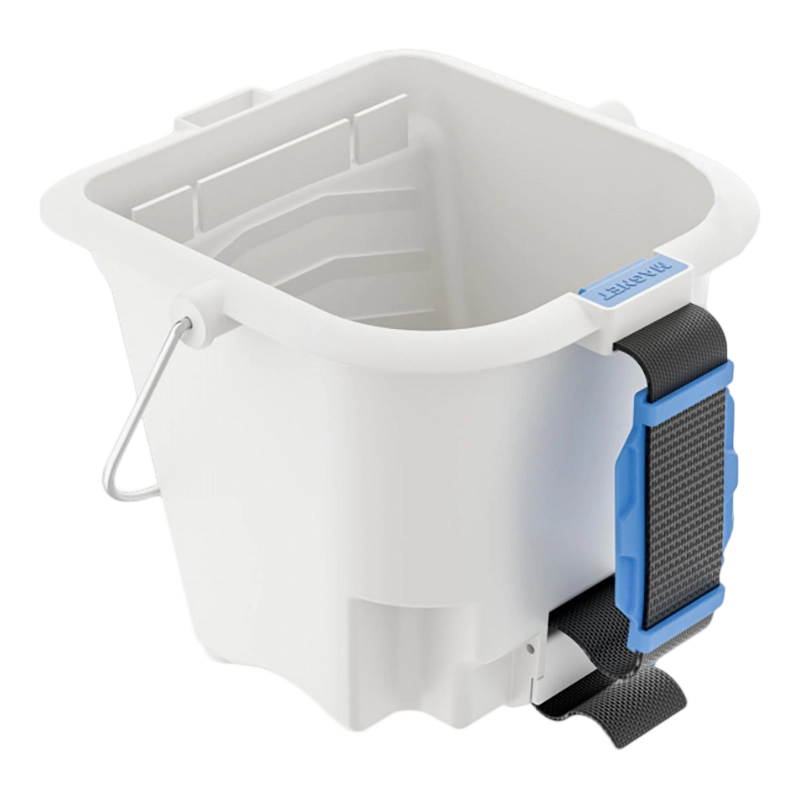
A bucket grid system consists of a 5-gallon (approximately 19-liter) bucket fitted with a metal or plastic grid insert. The roller is loaded directly from the bucket and excess paint is removed by rolling it against the grid. This setup is a staple in professional and commercial painting environments.
Because the entire can of paint sits in the bucket, painters can work for extended periods without refilling — a key advantage on large commercial walls, warehouses, or multi-room residential jobs where workflow continuity is critical.
Paint Waste: Which System Is More Economical?
Paint waste is one of the most meaningful cost factors in professional painting. Here is how the two systems compare:
Paint Roller Tray Waste
A paint roller tray typically holds a small amount of paint at a time, which means more frequent refilling. Every refill introduces the risk of over-pouring, dripping, or leaving residual paint in the tray at the end of a session. Paint left sitting in an open tray also dries faster due to the larger exposed surface area. On a full workday, a painter using a tray may waste 5–10% more paint than one using a sealed bucket system, particularly in warm or dry conditions.
Bucket Grid Waste
The bucket grid system keeps paint enclosed in a 5-gallon container, dramatically reducing evaporation and skinning. Unused paint can be resealed directly in the bucket. Waste is significantly lower over long sessions, and the consistent depth of the bucket ensures the roller is always adequately loaded without double-dipping or dry-rolling.
Ease of Cleaning: A Practical Comparison
Cleaning time directly affects daily productivity and material costs. One of the most effective ways to speed up cleanup on a paint roller tray is to use a lining paint tray insert — a disposable plastic or foil liner that fits inside the tray and can be peeled away after use, leaving the tray itself almost entirely clean. The table below summarizes the key differences:
| Factor | Paint Roller Tray | Bucket Grid System |
|---|---|---|
| Average clean-up time | 3–5 minutes (with liner) | 5–8 minutes |
| Lining paint tray option | Yes (disposable) | No standard liner |
| Water usage (latex) | Low–Medium | Medium–High |
| Grid cleaning difficulty | N/A | Moderate (grid fins trap paint) |
| Reusability | High (with liner swap) | High (durable bucket) |
When a lining paint tray insert is used, a paint roller tray can be cleaned in under a minute — simply peel and discard the liner. This makes the paint roller tray the clear winner for speed of cleanup in short jobs or when switching between colors frequently. The bucket grid, by contrast, requires rinsing both the bucket interior and the grid's metal fins, which can trap dried paint if not addressed promptly.
Overall Efficiency for Professional Painters
Efficiency in a professional context means covering more surface area in less time, with fewer interruptions and less fatigue. Here is how both tools perform across key professional scenarios:
- Large commercial projects (warehouses, open-plan offices): The bucket grid system wins decisively. Painters can load the roller continuously without stopping to refill, maintaining a steady pace. On a 500 m² wall, a crew using bucket grids may complete the job 20–30% faster than one relying solely on a paint roller tray.
- Residential rooms with multiple colors: The paint roller tray has the advantage. Its small capacity and lining paint tray system make color changes fast and straightforward — essential when painting accent walls or multi-tone interiors.
- Ceiling work: A paint roller tray placed on a ladder shelf offers better access control and reduces the risk of spillage compared to a heavy 5-gallon bucket. The tray's lightweight design — typically under 500g — is a practical advantage here.
- Exterior painting: The bucket grid system is preferred for wide exterior surfaces. The larger paint volume and consistent roller loading reduce streaking and lap marks over long horizontal or vertical runs.
Cost Comparison: Upfront and Ongoing
The initial cost difference between a paint roller tray and a bucket grid system is relatively small, but ongoing expenses can vary:
- A standard plastic paint roller tray costs between $3–$8, while a premium metal version runs $10–$20.
- Lining paint tray inserts cost approximately $0.50–$1.50 each, adding up on high-volume days — though the time saved on cleaning often justifies the expense.
- A 5-gallon bucket with a metal grid insert typically costs $8–$15 combined — a one-time investment that lasts for years with proper maintenance.
- Over a 12-month period, a professional painter using daily lining paint tray inserts could spend $100–$200 more per year than a colleague using a reusable bucket grid system.
When to Choose a Paint Roller Tray Over a Bucket Grid
Despite the bucket grid's advantages on large jobs, the paint roller tray remains the smarter choice in the following situations:
- When working on small rooms or touch-up jobs requiring less than 1 liter of paint
- When using multiple paint colors in a single session, where a lining paint tray makes color transitions quick and mess-free
- When working on a ladder or scaffolding where a lightweight tool is essential
- When speed of cleanup is a priority — especially with a lining paint tray insert
- When introducing apprentice painters to rolling technique, as the paint roller tray provides a more controlled loading surface
The most experienced professional painters do not choose one tool over the other — they use both strategically. A paint roller tray is the go-to tool for precision, color flexibility, and ladder work, while the bucket grid system dominates in high-output, large-surface applications where speed and paint economy are paramount.
If you are outfitting a professional kit from scratch, invest in a quality paint roller tray with lining paint tray inserts for day-to-day versatility, and keep a 5-gallon bucket with a grid on hand for large-scale contracts. Together, they cover every scenario a working painter is likely to face — and that combination will always outperform relying on either tool alone.