English
 Español

When it comes to cutting in along edges, the handle paint brush outperforms a paint edger tool in precision, versatility, and professional finish quality — but the edger tool has a clear advantage in speed for straight, unobstructed lines. Understanding when to use each tool is what separates a clean result from a frustrating one.
Cutting in refers to painting the narrow border areas where walls meet ceilings, trim, baseboards, or corners — zones where rollers cannot reach. Both the handle paint brush and the paint edger tool are designed for this task, but they approach it very differently in terms of control, flexibility, and learning curve.
What Is Cutting In and Why Does It Matter
Cutting in is typically the first step in any wall painting project. A clean cut-in line — usually 2 to 3 inches wide along edges — creates a border that the roller can then fill in without overlapping onto trim or ceilings. If this step is done poorly, no amount of careful rolling will fix the visible streaks, bleeds, or uneven edges left behind.
Professionals typically spend 20–30% of their total painting time on cutting in, which highlights how critical tool selection is for this phase. Getting it right the first time saves both time and paint.
Handle Paint Brush Performance for Cutting In
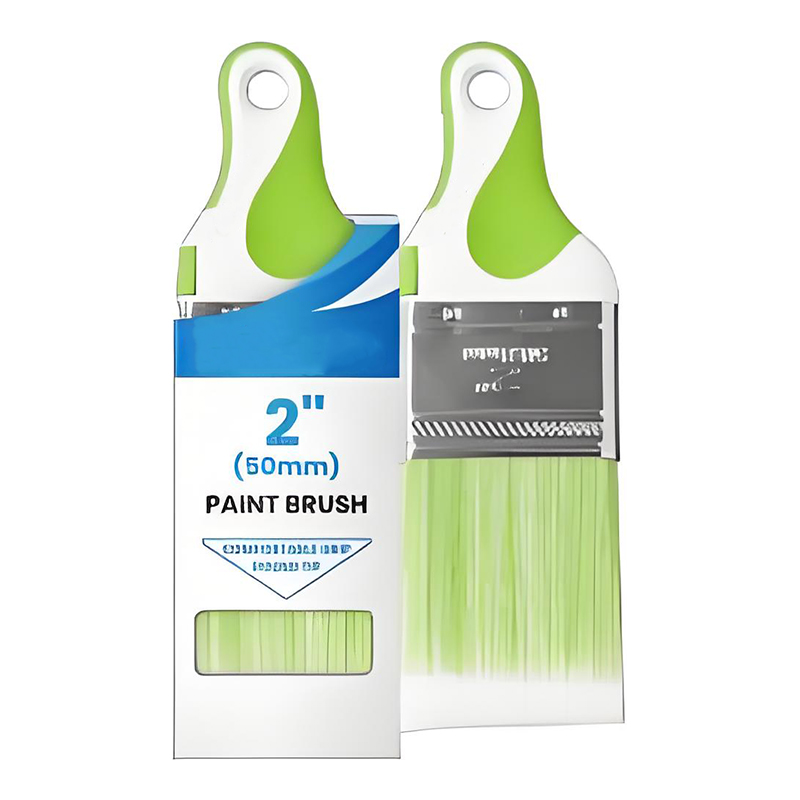
A handle paint brush — particularly an angled sash brush in the 2-inch to 2.5-inch range — is widely regarded as the gold standard for cutting in. The angled bristle design allows the painter to guide paint precisely along a boundary without a guide, relying on wrist movement and bristle flexibility to feather the edge cleanly.
Key performance advantages of the handle paint brush for edge work include:
- Adaptability to corners, curved surfaces, and irregular trim profiles
- Superior feathering capability for blending wet edges before they dry
- Works effectively with paint brushes for acrylic paint and latex formulas without bristle splaying
- Compatible with thicker paints, primers, and textured wall coatings
- Greater reach into tight recesses and detailed woodwork
For painters comfortable with brush technique, a quality handle paint brush can produce a razor-sharp cut-in line within 1–2mm of the target edge without tape — a level of accuracy that edger tools often cannot replicate on uneven or textured surfaces.
When selecting paint brushes for walls, a flagged-tip synthetic brush tends to hold more paint and release it evenly, reducing the number of times you need to reload — an important consideration for long ceiling-wall junctions.
Paint Edger Tool Performance for Cutting In
A paint edger tool is a pad-style applicator fitted with small guide wheels that ride along trim or ceiling lines, acting as a physical boundary to keep paint on the wall. It is designed for speed and simplicity, making it appealing to beginners or DIY painters who want to avoid freehand brush technique.
Performance strengths of the paint edger tool:
- Faster application speed on long, straight edges such as ceiling-wall junctions
- Lower skill requirement — suitable for first-time DIY painters
- Reduces risk of ceiling bleed on smooth, flat surfaces
- Covers wider cut-in zones in fewer strokes
However, the paint edger tool has notable limitations. Its guide wheels can pick up paint from the adjacent surface and transfer it across the boundary — ironically causing the very bleed it is supposed to prevent. On textured ceilings or uneven trim, the wheels lose contact with the guide surface and accuracy drops significantly.
Professional painters report that edger tools frequently require touch-up work with a handle paint brush anyway, which eliminates the time advantage the tool was supposed to offer in the first place.
Side-by-Side Comparison: Handle Paint Brush vs Paint Edger Tool
The table below summarizes how both tools compare across key performance factors relevant to cutting in:
| Factor | Handle Paint Brush | Paint Edger Tool |
|---|---|---|
| Precision on edges | High | Moderate |
| Speed on long straight lines | Moderate | High |
| Performance on textured surfaces | High | Low |
| Corner and recess access | Excellent | Poor |
| Skill level required | Moderate–High | Low |
| Compatibility with acrylic paint | Excellent | Moderate |
| Touch-up needed after use | Rarely | Often |
| Durability and reusability | High (with care) | Moderate |
When the Handle Paint Brush Is the Better Choice
The handle paint brush is the superior choice in the following real-world scenarios:
- Textured or popcorn ceilings — the edger's guide wheels cannot maintain contact, causing inconsistent lines
- Detailed trim work — door frames, window casings, and baseboards require flexible bristle access
- Interior corners — a brush can reach fully into a 90-degree corner; an edger cannot
- Professional-finish projects — where feathering and blending are needed to match wet roller edges
- Painting with acrylic or latex formulas — high-quality paint brushes for acrylic paint release pigment evenly without drag
In a typical room with 9-foot ceilings, an experienced painter using a handle paint brush can cut in a full perimeter of approximately 48 linear feet in under 20 minutes with minimal touch-up — a benchmark that edger tools rarely match in complex rooms.
When the Paint Edger Tool Has the Edge
There are situations where a paint edger tool offers a practical advantage, particularly for DIY users:
- Long uninterrupted ceiling lines on smooth, flat surfaces where the guide wheels stay consistently in contact
- Single-color rooms where slight imprecision at boundaries is acceptable
- Beginner DIY projects where the user lacks confidence in freehand brush control
In these narrow use cases, the edger tool can reduce effort and shorten the learning curve — though it should still be paired with a handle paint brush for corners and trim areas it cannot access.
How to Get the Best Cut-In Results with a Handle Paint Brush
For those committed to using a handle paint brush for cutting in, the following technique guidelines will maximize results:
- Load the brush correctly — dip bristles no more than one-third of the bristle length into paint, then tap (do not wipe) against the container side to remove excess.
- Start 1 inch from the edge — lay paint down slightly away from the boundary first, then pull the bristle tip toward and along the edge using the angled tip as a guide.
- Maintain a consistent angle — hold the brush at roughly 45 degrees to the wall surface for optimal tip control and line consistency.
- Work in 12–18 inch strokes — shorter strokes give more control and prevent the paint from drying unevenly before you can blend.
- Feather each stroke into the previous one — this eliminates lap marks and ensures the cut-in zone blends seamlessly with the rolled paint.
Using quality paint brushes and rollers together as a system — brush for edges, roller for fill — consistently delivers the most professional interior wall finish. The two tools are designed to complement each other, and no edger pad fully replaces the brush in that partnership.
For the vast majority of cutting-in tasks — especially in rooms with texture, detailed trim, corners, or any surface irregularity — the handle paint brush is the more reliable, versatile, and ultimately faster tool once basic technique is developed. The paint edger tool offers a shortcut on smooth, simple surfaces, but frequently creates additional work through bleed, missed corners, and inconsistent edges.
Whether you are selecting paint brushes for walls in a full room repaint or doing precision trim work, investing time in mastering the handle paint brush for cutting in will produce cleaner results, fewer touch-ups, and a finish that holds up to close inspection. The edger tool is a convenience item; the handle paint brush is a professional standard.