English
 Español

WHY IS THE PAINT BRUSH ESSENTIAL AND WHAT IS ITS CORE VALUE?
A. Introduction to Paint Brushes (Paint Brush)
The Paint Brush is one of the most fundamental and critical tools in the coating industry. It is not just a simple application tool; it is the core medium for achieving precise film thickness, controlling stroke texture, and ensuring perfect coverage of edge details. In fields such as industrial protection, architectural decoration, and furniture restoration, the importance of the Paint Brush is irreplaceable, especially when precise "cutting in" of edges or treatment of complex geometries is required, where its flexibility and accuracy far surpass rollers or spray guns.
1. The Core Role of the Paint Brush in Modern Coating: The Cornerstone of Home Decoration and Industrial Protection
- Precision Control: The Paint Brush can apply precise pressure and direction to the coating, achieving micro-level control over film thickness, which is crucial for high-demand coatings (such as varnishes, anti-corrosion paints).
- Detail and Edge Treatment: Whether it is skirting boards, door and window frames in interior decoration, or bolts and welds on industrial equipment, the Paint Brush ensures that the coating fully penetrates and covers the area, preventing a lack of protection due to tool limitations.
- Penetration Advantage: Compared to rollers, the brushing method uses the physical action of the bristles to better "work" the coating into the micro-pores and crevices of the substrate. This is particularly suitable for rough or porous surfaces, enhancing the adhesion between the coating and the substrate.
2. History and Cultural Significance: The Origin and Evolution of the Paint Brush
The history of the Paint Brush can be traced back to the earliest human acts of decoration and protection. In ancient times, natural plant fibers or animal hairs were bundled together to apply natural lacquers (such as raw lacquer).
- Origin Stage: Early "brushes" were mostly used for ancient lacquerware art and mural painting. In East Asian countries like China, the evolution of lacquer tools reflects the ancient artisans' pursuit of ultimate smoothness and durability in coatings.
- Industrial Transition: With the rise of modern paints (solvent-based coatings) and large-scale construction in the 19th century, the Paint Brush began to develop toward standardization and specialization. Natural hog bristle became the main material due to its unique taper and absorbency.
- Synthetic Material Revolution: In the mid-20th century, with the popularization of water-based coatings, the problems of water absorption and easy deformation of natural hair brushes became apparent. The emergence of synthetic fibers such as nylon and polyester completely transformed the Paint Brush industry. Their compatibility with water-based coatings greatly promoted the application of modern environmentally friendly paints.
B. Anatomy of a Paint Brush
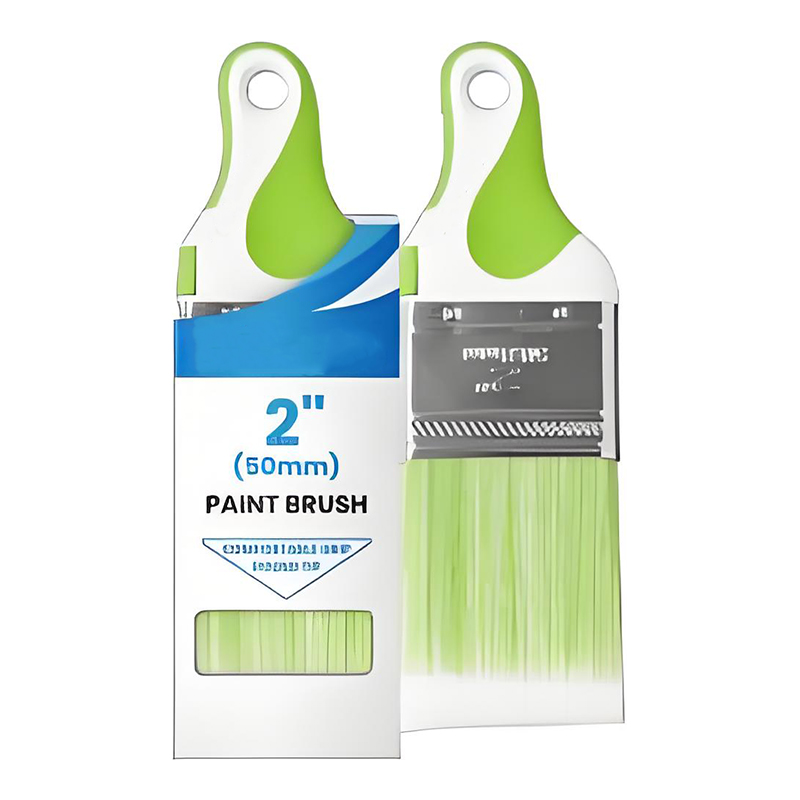
A Paint Brush consists of three main parts: Bristles/Filaments, the Ferrule, and the Handle. Each part plays a critical role in coating performance and user experience.
1. Bristles/Filaments: The Triangle of Material, Cost, and Performance
The bristles are the core of the Paint Brush, and their material determines the loading, release, and final surface effect of the coating.
| Feature | Natural Bristle (Hog Hair, etc.) | Synthetic Filament (Nylon, Polyester, or Blend) |
|---|---|---|
| Main Material | Hog bristle, badger hair, ox ear hair, etc. | Nylon, Polyester, or a blend |
| Coating Compatibility | Excellent | Excellent |
| Water Absorbency/Behavior in Water | Highly absorbent, softens and deforms when wet | Very low absorbency, maintains shape and stiffness |
| Suitable Coating Type | Oil-based (solvent-based) coatings | Water-based (latex-type) coatings |
| Brush Mark Effect | Finer texture, good coating flow and leveling | Prone to brush marks, but greatly reduced with modern techniques |
| Durability | Good durability against strong solvents, but prone to wear | Strong resistance to abrasion and chemical corrosion |
| Cost | Higher (depending on grade and length) | Moderate to high (depending on formulation) |
Extension: The Microscopic Role of "Flagging" at the Bristle Tip
"Flagging" refers to the microscopic split ends of the bristles that form naturally or mechanically, resembling a tiny flag. These splits are a key feature of a high-quality Paint Brush, serving to:
- Increase Load Capacity: Increases the surface area of the bristles, allowing them to absorb and hold more paint.
- Optimize Release: Ensures smooth and consistent release of the coating.
- Minimize Brush Marks: The fine splits better "lay down" the coating, making the film smoother and significantly reducing visible brush marks.
2. The Ferrule: The Necessity of Stainless Steel and Clamping Force on Bristle Longevity
The ferrule is the metal sleeve connecting the bristles and the handle. Its main function is to secure the bristles and maintain their working shape and angle.
- Material Requirement: Modern Paint Brush ferrules are mostly made of stainless steel or nickel/chrome-plated steel. Stainless steel is crucial because water-based coatings (containing water) and cleaning agent residues can cause ordinary metal ferrules to rust. Rusting not only contaminates the paint color but can also cause the ferrule to expand, destroying the Epoxy adhesive layer and leading to bristle loss.
- "Clamping Force": The ferrule uses professional hydraulic crimping to form a strong "clamping force" on the bristle base. This structure, combined with the internal Epoxy adhesive, ensures the bristles remain stable under the high stress of pulling and twisting during painting, which is a key guarantee of the brush's longevity and performance.
3. The Handle: Ergonomic Design and the Trade-off for Long-Duration Comfort
The handle is the interface where the user interacts with the Paint Brush. Its design directly affects the control of the brush and the fatigue experienced during long work periods.
- Materials: Common materials include solid wood (such as birch or maple, providing good balance), plastic (lower cost, easy to clean), and composite materials (with rubber grips added for anti-slip and shock absorption).
- Ergonomics: Professional Paint Brush handles typically come in several designs:
- Rat-tail Handle: Long and slender, round, suitable for detailed operations.
- Beavertail Handle: Wider and flatter, providing a larger gripping surface for support, suitable for large area painting and high-intensity work to distribute finger pressure.
- The balance of the handle should match the weight of the bristles to ensure minimal strain on the wrist and arm during painting.
HOW ARE PAINT BRUSHES CLASSIFIED, CHOSEN, AND APPLIED?
A. Types of Paint Brushes (Classification of Paint Brushes)
Paint Brushes are primarily classified based on two dimensions: bristle shape and bristle material. The combination of different shapes and materials determines the most suitable coating and painting task for the brush.
1. Shape and Function Breakdown
| Brush Shape | Description and Features | Main Function and Application Scenarios |
|---|---|---|
| Flat Brush | Bristle end is straight, width is uniform, and bristles are relatively long. | Suitable for large, uniform painting areas, such as walls and flat boards. Provides the maximum coating coverage area. |
| Angled Sash Brush | Bristle end is slanted, typically at an angle of $45^\circ$ to $55^\circ$. | Ideal for "cutting in" edges, line detailing, and corner trimming, such as window frames, door frames, and the joint between skirting boards and walls. Offers precise control. |
| Round Brush | Bristles are circular or oval-shaped, and the brush head is thick. | Suitable for irregular surfaces and complex structures, such as railings, banisters, and carved furniture. Provides uniform 360-degree coverage. |
| Pad Painter | Structure is more like a bristle pad with a handle, with very short bristles. | Specifically used for fast, flat painting of straight edges, typically used at the junction of the ceiling and wall, as an alternative to the traditional angled sash brush. |
2. Bristle Material and Coating Chemical Compatibility
Bristle material is the most important factor when choosing a Paint Brush, as it directly relates to painting performance, film quality, and the brush's service life.
| Bristle Material | Recommended Coating Type | Bristle Characteristics | Advantages | Disadvantages |
|---|---|---|---|---|
| Natural Hog Hair | Oil-based paints, varnishes, shellac | Bristle tips have natural flagging, are tapered, and have high moisture absorption. | Excellent stiffness and elasticity, better handling of thick oil-based paints, good leveling of brush marks. | Easily absorbs moisture from water-based coatings, causing bristles to swell and soften, making them unusable for water-based paints. |
| Polyester | Water-based paints, latex paints, acrylic paints | Bristles are abrasion-resistant, have extremely low water absorption, and good elasticity. | Suitable for all water-based coatings, bristles maintain stiffness and provide good control. | Not suitable for strong solvent-based oil paints, which can cause the bristles to soften or deform. |
| Nylon/Polyester Blend | Versatile (mainly for water-based paints) | Combines the softness of nylon and the stiffness of polyester. | Excellent overall performance, high durability, suitable for various coatings, a common choice for high-performance water-based brushes. | Usually higher priced than single polyester or low-end natural hair brushes. |
| Wool/Fine Hair | Varnishes, wood stains, high-gloss coatings | Bristles are extremely soft and fine, with moderate load capacity. | Ideal choice for achieving a mirror effect and minimal brush marks, especially for the final finish coat. | Bristles are fragile, not suitable for large, rough area painting; high cleaning and maintenance requirements. |
B. Choosing the Right Paint Brush (Selecting the Appropriate Paint Brush)
Choosing the appropriate Paint Brush is a comprehensive decision-making process that requires considering the chemical properties of the coating, the condition of the surface to be painted, and the desired final effect.
1. Scientific Basis for Medium Matching
- Water-based Paints (e.g., Latex): Synthetic filament brushes (polyester or nylon/polyester blend) must be used. Natural hog hair bristles absorb water from the coating, causing the bristles to swell, lose elasticity, and result in uneven and uncontrollable application. Synthetic filament brushes maintain their structural integrity and stiffness due to their hydrophobic nature.
- Oil-based Paints (e.g., Alkyd, Varnish): Traditionally, natural hog hair brushes are selected. The natural tapered structure and flexibility of hog hair allow for the smooth and even release of thick oil-based coatings.
2. Matching Painting Task to Desired Effect
| Painting Task | Recommended Brush Type | Suggested Brush Size (Width) | Reason for Selection |
|---|---|---|---|
| Large Wall Areas | Flat Brush | $3.5 \text{ inch}$ to $4 \text{ inch}$ | Focus on efficiency and coverage area; bristles need high paint load capacity. |
| Window and Door Frames | Angled Sash Brush | $1.5 \text{ inch}$ to $2.5 \text{ inch}$ | Precise edge control; the angle facilitates handling narrow edges and inner corners. |
| Furniture, Cabinets | Flat or Oval Brush | $2 \text{ inch}$ to $3 \text{ inch}$ | Seeks moderate detail handling and good surface leveling. |
| Pipes, Railings | Round Brush | Any size, depending on pipe diameter | Round bristles can wrap around curved surfaces for uniform, all-around coverage. |
C. Standards for Judging a High-Quality Paint Brush
Even after selecting the correct type and material, the inherent quality of the Paint Brush remains crucial in determining the final coating effect.
1. Bristle Taper and Tip Treatment:
- High-quality bristles should have a noticeable taper (gradually thinning from base to tip), ensuring the brush maintains elasticity during application.
- The "flagging" at the bristle tip must be fine and uniform to maximize coating load and minimize brush marks.
2. Bristle Density and Length:
- Bristles must be tightly packed in the ferrule; high density means higher paint load capacity and more uniform coating release.
- The ratio of bristle length to thickness is a professional indicator; a brush with moderate length and uniform thickness is easier to control and more durable.
3. Ferrule Fixing Strength:
- Check that the connection between the ferrule and the handle is secure, and that the Epoxy adhesive inside the ferrule has completely secured all bristles. Gently pulling the bristles should not cause shedding, which is the basic guarantee against "shedding" during painting.
WHAT ARE THE PRODUCTION PROCESS AND QUALITY CONTROL FOR A PAINT BRUSH?
A. In-Depth Analysis of the Paint Brush Manufacturing Process
The production of professional Paint Brushes involves several critical steps, each directly impacting the final product's quality.
1. Bristle Preparation and Blending
- Natural Hair Treatment:
- Cleaning and Grading: Natural hog bristles must undergo strict cleaning, sterilization, and degreasing after collection.
- Taper Screening: The natural taper of hog bristles (thinning from root to tip) is the foundation of their excellent elasticity and paint load capacity, requiring strict screening and grading based on length and taper.
- Synthetic Filament Preparation:
- Drawing and Tapering: Synthetic filaments (e.g., polyester, nylon) require special drawing processes to simulate the taper and splits (flagging) of natural hair.
- Blending Ratios: To balance cost, stiffness, and wear resistance, fibers of different sizes, materials, and crimp are often blended, for example: nylon provides softness, and polyester provides stiffness and shape retention.
- 【Key Process: Flagging】 High-quality synthetic filament brushes must undergo manual or mechanical sanding and splitting (flagging) to increase the surface area of the bristle tip, enabling efficient paint absorption and smooth release.
2. Core Assembly Process
- Precise Weighing and Insertion of Bristles: Experienced workers or automated machines accurately weigh the bristle bundles according to the brush specifications. The bristles must be inserted into the pre-made ferrule mold or assembly clamp with the correct orientation (taper facing outwards).
- Epoxy Resin Potting Technology:
- Epoxy resin (a high-strength adhesive) is injected into the gap formed by the bristle roots and the bottom of the ferrule.
- Function: Epoxy resin is critical for preventing bristle loss and ensuring the structural stability of the bristle bundle. It effectively resists erosion from water and most solvents.
- Potting Depth and Curing: The potting depth must be precisely controlled to ensure fixation without affecting the working length of the bristles. This is followed by high-temperature or room-temperature curing to achieve maximum strength of the adhesive layer.
3. Curing, Shaping, and Finishing
- High-Temperature Shaping (Curing & Setting): For synthetic brushes, after assembly, they typically undergo high-temperature treatment in an oven to permanently set the shape and angle of the bristle bundle (e.g., angled sash brushes). This ensures the brush maintains its original shape even when wet or after use.
- Ferrule Crimping: The handle is inserted into the ferrule with the Epoxy resin and then subjected to multi-point crimping or rolling by a machine to ensure a secure mechanical connection between the ferrule and the handle.
- Handle Sanding and Varnishing: The handle is finely sanded, polished, or varnished to improve grip, stain resistance, and durability.
B. Quality Control and Industry Standards for Paint Brushes
Professional Paint Brush manufacturers execute stringent quality control procedures to ensure product performance meets or exceeds industry benchmarks.
1. Key Performance Test Parameter Comparison
| Quality Control Test | Evaluation Metric/Parameter | Premium Standard (Target Performance) |
|---|---|---|
| Bristle Shedding Rate | Number of bristles lost upon initial use and after prolonged use. | Initial: Extremely low or near zero ($< 0.1\%$). Long-term: Bristle bundle structure intact, no noticeable loosening. |
| Paint Load and Release Uniformity | Weight of coating absorbed by the brush per unit time; fluctuation rate of coating release per unit length. | Absorption and application are in a stable linear relationship; coating release is uniform, with low fluctuation ($< 5\%$). |
| Elastic Recovery Rate | The ability of the bristles to return to their original angle after being wetted or bent under pressure. | Extremely fast recovery time, minimal deviation from recovery angle ($< 3^\circ$), ensuring stable application. |
| Wear Resistance (Durability) | Loss of bristle length and shape retention after simulated high-intensity painting. | Capable of withstanding multiple cleanings and prolonged use; bristle tip shape remains intact. |
| Solvent Corrosion Resistance | Degree of deformation or softening of bristles after immersion in strong solvents or highly alkaline coatings. | Bristle structure and hardness remain stable, with no noticeable melting or degradation. |
2. Industry Certifications and Standards
The manufacturing and performance of Paint Brushes often refer to international and national industrial standards to ensure the product's versatility and reliability in the global market. These standards typically cover:
- Composition and safety of bristle materials (especially synthetic filaments, ensuring no harmful chemical residues).
- Corrosion resistance of the ferrule (often evaluated through methods like salt spray testing).
- Dimensions, tolerances, and nominal specifications of the brush, to guarantee the brush purchased by the user meets their expected application.
C. The Impact of Quality Manufacturing on Economic Efficiency
While the investment in a high-quality manufacturing process increases the initial production cost, it often brings significant economic benefits to the end-user:
- Reduced Rework: High-quality brushes provide a smooth, mark-free film, significantly lowering the rate of rework caused by brush marks, shedding, or uneven coating.
- Material Savings: Superior paint load and release properties mean the coating is transferred more efficiently to the surface, reducing waste.
- Extended Tool Life: The strong Epoxy fixation and corrosion-resistant ferrule allow the brush to withstand repeated cleaning and solvent immersion, effectively extending the tool's service life.
HOW DO PAINT BRUSHES WORK, AND WHAT ARE THE HEALTH AND SAFETY CONCERNS?
A. Rheology and Painting Performance
The interaction between the Paint Brush and the coating is essentially a complex process of fluid mechanics and rheology. Understanding these principles is the foundation for achieving a flawless finish.
1. Coating Thixotropy: The Effect of Brush Shear Force
- Definition: Thixotropy is the property of certain fluids (like paint) where their viscosity temporarily decreases and fluidity increases when subjected to shear force (like fast brushing); when the shear force stops (the paint is left on the wall), the viscosity gradually recovers.
- Role of the Paint Brush: The Paint Brush applies high shear force to the coating through the bristles during application, thinning the paint to facilitate application and leveling. Once the brush leaves the surface, the paint's viscosity rapidly recovers, preventing sagging.
- Contribution of High-Quality Brushes: The elasticity, length, and taper of the bristles influence the uniformity of the applied shear force. A well-designed brush ensures uniform shear distribution, leading to consistent leveling across the entire paint film.
2. The Relationship Between Bristles and Wet Film Thickness
The choice and use of the Paint Brush directly determine the uniformity of the Wet Film Thickness (WFT).
- Control of Wet Film Thickness (WFT): WFT is a critical parameter that affects the final performance (e.g., hiding power, durability) of the coating.
- Bristle Stiffness: Moderately stiff bristles are better able to spread the coating evenly. Overly stiff bristles may lead to an uneven film and obvious brush marks; overly soft bristles make it difficult to control the amount of paint applied.
| Bristle Characteristic | Impact on Wet Film Thickness (WFT) | Impact on Painting Effect |
|---|---|---|
| High Elasticity/Stiffness | Lower and more uniform WFT | Thinner film, fewer brush marks, but may require multiple coats |
| High Load Capacity/Density | Higher WFT, but easy to appear uneven | Thicker film, strong hiding power, but increased risk of sagging |
| High Flagging Count | WFT is easier to spread smoothly | Reduces brush marks, improves the aesthetics of the coating |
B. Advanced Tips and Tricks (High-Efficiency Painting Techniques)
Professional coating results require precise control over the brush movement, pressure, and coating state.
1. The Art of Paint Load Control
- Correct Dipping: Only dip the bristles into the paint to a depth of $1/3$ to $1/2$. Over-dipping leads to paint contamination at the bristle base, making thorough cleaning difficult, and increases the risk of sagging.
- Precise Unloading: Gently scrape the bristles on the side of the can or in the paint tray to remove excess paint, preventing dripping on the work surface.
2. Mark-Free Painting Techniques: Managing "Wet Edge" and "Drying Time"
- Wet Edge: Always keep the edge of the currently painted area wet. Blending the next stroke before the paint dries allows the coatings to fuse, avoiding noticeable lap marks.
- The Final "Lay Off" Stroke: After covering an area, gently sweep the surface of the coating with the brush using minimal pressure and in a single direction. This action allows the paint to complete its final leveling before its viscosity recovers, minimizing brush marks.
C. Paint Brush and User Health and Safety
Painting operations involve chemical solvents and dust, so the use and maintenance of Paint Brushes must follow strict health and safety guidelines.
1. Occupational Health Risks
| Source of Risk | Potential Health Impact | Preventive Measures (Related to Paint Brush) |
|---|---|---|
| Volatilization of Cleaning Solvents | Respiratory irritation, dizziness, chronic nervous system effects (solvent-based paints only) | Work in well-ventilated areas, use low-VOC or water-based cleaners, and use a ferrule sealing cap to minimize solvent contact during cleaning. |
| Allergens from Natural Hair Brushes | Skin and respiratory allergies (rare, mainly from specific animal hair) | Thoroughly clean and shake out the new brush before use, and wear gloves during painting. |
| Old Coating Dust | Inhalation of toxic substances like lead and asbestos (in old building renovations) | Absolutely avoid using a Paint Brush for dry brushing or sanding old coatings. |
2. Safety Operating Procedures and Tool Maintenance
- Personal Protective Equipment (PPE): Safety glasses and chemical-resistant gloves must be worn when handling strong solvents or applying specific chemical coatings.
- Handle Safety Design: High-quality Paint Brush handles should have anti-slip or textured surfaces to ensure they do not slip when hands are wet or gloved, preventing accidental injury or paint splatter.
- Child Safety: Paints and cleaning agents should be stored out of reach of children. Paint Brushes used by children (e.g., craft brushes) should be confirmed to meet non-toxic and heavy metal-free standards.
HOW TO TROUBLESHOOT PAINTING ISSUES, AND WHAT IS THE COST-BENEFIT?
A. Painting Troubleshooting and Paint Brush Solutions (FAQ: Troubleshooting)
This section provides solutions to the most common problems encountered by users during actual painting, presented in a Q&A format, focusing on Paint Brush selection and usage.
Q1: Why does my painted surface always have noticeable brush marks?
A: Brush marks are the most common coating issue, usually caused by the following Paint Brush-related factors:
- Brush Quality is Poor: Bristle tips lack sufficient "flagging" (splits), causing the paint to be unable to spread smoothly.
- Solution: Select a high-density, premium Paint Brush with good flagging at the bristle tips and an appropriate taper.
- Paint Viscosity is Too High: Especially in high ambient temperatures, the paint dries too quickly, making it difficult for the brush to work on a "wet edge."
- Solution: Before painting, add an appropriate amount of thinner (water for water-based, solvent for oil-based) to reduce viscosity, or use professional leveling additives.
- Uneven Brushing Pressure: Applying too much or uneven pressure during painting causes excessive bending of the bristles below the ferrule, deepening the marks.
- Solution: Ensure brushing pressure is light and uniform, applying almost no pressure on the final stroke, allowing the bristle tips to gently "lay down" the paint for self-leveling.
Q2: Why does my new Paint Brush shed bristles and affect the coating quality?
A: Shedding is a hallmark of low-quality Paint Brushes, but minor initial shedding of loose hairs is normal for new brushes.
- Initial Loose Hairs: Loose hairs that remained in the bristle bundle during the manufacturing process.
- Solution: Before official use, gently tap and rub the new brush in your hand or on a rough surface to remove all loose hairs, then wet it in the appropriate liquid for the paint (water or thinner), and shake off the excess.
- Adhesive Failure: The bristle base is secured by Epoxy resin within the ferrule. If the potting is insufficient or the adhesive quality is poor, bristles will shed in clumps.
- Solution: Choose a Paint Brush with a solid structure, tight ferrule crimping, and visible, fully cured adhesive fixing inside the ferrule.
Q3: Can hardened or deformed bristles be restored?
A: The possibility of restoration depends on the bristle material and the degree of hardening.
| Bristle Condition | Paint Type | Restoration Possibility | Suggested Treatment |
|---|---|---|---|
| Tip Hardening Only | Water-based Paint | Very High | Immediately soak in warm (not hot) soapy water and gently rub with fingers until the residue dissolves. |
| Deep Hardening | Oil-based Paint | Moderate | Soak in a strong solvent (like paint stripper), but monitor the time carefully to prevent permanent damage to synthetic or natural hair. |
| Permanent Deformation | Any Paint | Very Low | The bristle base is damaged or the synthetic hair has melted due to high heat, usually necessitating disposal. |
B. Environmental and Sustainability Development of the Paint Brush
The industry's focus on environmental protection is mainly reflected in raw material selection, production processes, and the impact on coating waste disposal.
1. Eco-Friendly Handles: Low Carbon and Renewable Materials
- Recycled Plastics: Using recycled polypropylene (PP) or high-density polyethylene (HDPE) to manufacture handles, reducing the consumption of virgin plastic.
- Certified Wood: Using wood from sources certified by organizations like the FSC (Forest Stewardship Council) to ensure the sustainability of the wood source, avoiding illegal采伐.
- Bamboo and Bio-Based Materials: Bamboo is used for handles due to its rapid growth and renewability; bio-based polymers are beginning to replace traditional petroleum-based plastics.
2. Low Environmental Impact of Bristles
- Sustainable Synthetic Filaments: Developing new synthetic fibers with lower energy consumption and carbon footprint during production.
- Cleaning-Friendly Design: Bristles are designed to release paint more easily, thereby reducing the need for solvents and water during cleaning, lowering the discharge of wastewater.
C. The Economic Value of the Paint Brush in the Overall Coating Process
High-quality Paint Brushes, though having a higher initial investment, typically yield significant returns in the long-term cost-benefit analysis of a project.
1. Long-Term Cost-Benefit Analysis: Total Cost of Ownership (TCO) Comparison
| Parameter | Low-Quality Paint Brush | High-Quality Paint Brush | Economic Conclusion |
|---|---|---|---|
| Initial Purchase Cost | Low | High | High-quality tools require a higher initial investment. |
| Service Life/Durability | Short (typically disposable after 1-3 uses) | Long (reusable multiple times, strong solvent resistance) | The amortized cost of high-quality tools is lower. |
| Labor Efficiency | Low (low load capacity, frequent dipping required) | High (high load and release efficiency) | High-quality tools significantly reduce man-hours. |
| Rework Rate | High (caused by brush marks, shedding, etc.) | Low (high coating quality, fewer defects) | High-quality tools save material and labor rework costs. |
2. Reducing Rework Rate and Material Waste
- Reduced Rework: Professional Paint Brushes minimize coating defects through precise paint release and superior leveling, thereby reducing the labor and material costs required for re-sanding, cleaning, and re-coating.
- Optimized Material Utilization: Efficient bristles can transfer paint more thoroughly and evenly from the brush to the substrate, reducing waste that remains in the brush or is washed out during cleaning, thus improving the coating's transfer efficiency.