English
 Español

When it comes to finish quality, synthetic bristle wall paint brushes outperform natural bristle brushes for water-based paints, while natural bristle wall paint brushes deliver superior results with oil-based paints and varnishes. The choice between the two is not a matter of which is universally better — it is about matching the right bristle material to the right paint type and surface condition. Understanding this distinction upfront will save you time, money, and frustrating paint jobs.
What Are Natural Bristle Wall Paint Brushes Made Of?
Natural bristle wall paint brushes are made from animal hair, most commonly Chinese hog bristle (boar hair), ox hair, or badger hair. Each bristle strand has a split tip — known as a "flag" — which is a naturally occurring feature that helps hold more paint and release it evenly across a surface.
The hollow core structure of natural bristles also allows them to absorb and carry a larger volume of paint compared to many synthetic alternatives. This is why professional decorators have relied on hog bristle wall paint brushes for oil-based applications for generations.
However, natural bristles have a critical weakness: they absorb water. When used with latex or acrylic water-based wall paints, natural bristles swell, go limp, and lose their shape — resulting in streaky, uneven coverage and poor finish quality.
What Are Synthetic Bristle Wall Paint Brushes Made Of?
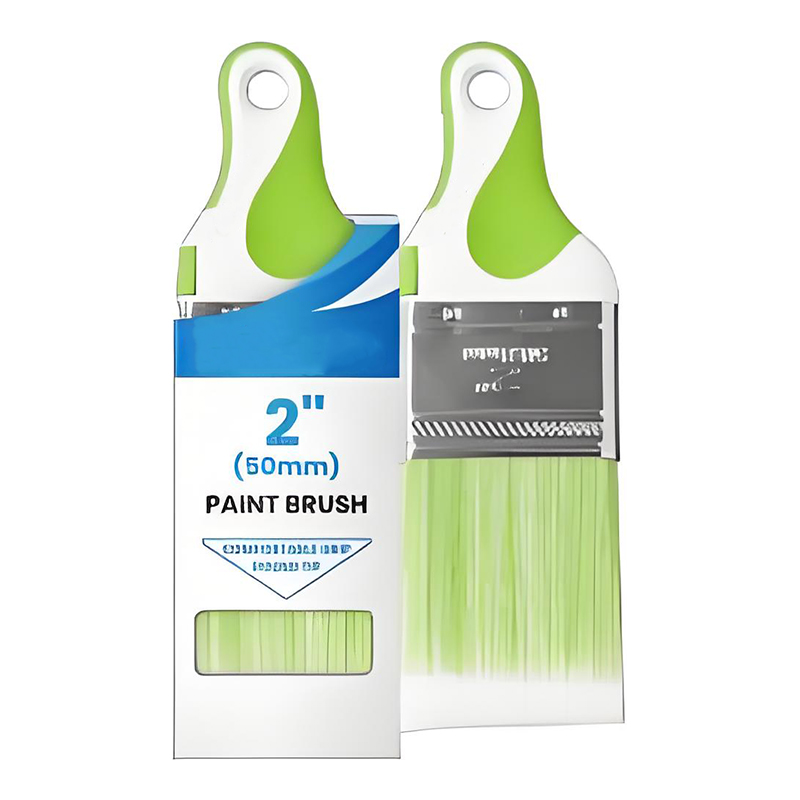
Synthetic bristle wall paint brushes are manufactured from nylon, polyester, or a blend of both. Modern synthetic filaments are engineered to mimic the flagged tips of natural bristles, providing comparable paint-holding capacity without the moisture absorption problem.
- Nylon bristles are soft and flexible, producing very smooth finishes on walls. They work well at low to medium paint viscosities.
- Polyester bristles are stiffer, offering better control and performance in both warm and cold environments, and are less prone to softening under heat.
- Nylon/polyester blended bristles combine flexibility with firmness, making them the most versatile synthetic option for general wall painting applications.
Because synthetic bristles do not absorb water, they maintain their stiffness, shape, and spring throughout the entire painting process — a key factor in achieving a consistent, brush-mark-free finish on walls.
Finish Quality Comparison: Natural vs Synthetic Wall Paint Brush
Finish quality depends on several interacting factors: paint type, surface texture, brush stroke technique, and bristle behavior. The table below summarizes how natural and synthetic wall paint brushes perform across the most common use scenarios.
| Criteria | Natural Bristle Wall Paint Brush | Synthetic Bristle Wall Paint Brush |
|---|---|---|
| Water-based paint finish | Poor — bristles swell and streak | Excellent — smooth, even coverage |
| Oil-based paint finish | Excellent — ultra-smooth, glassy | Good — slight texture may remain |
| Paint load capacity | High — hollow cores hold more paint | Medium to High — depends on filament density |
| Shape retention over time | Moderate — degrades with water exposure | High — maintains shape throughout use |
| Brush marks on smooth walls | Minimal with oil paints | Minimal with latex paints |
| Durability and lifespan | Lower with frequent water-based use | High — resists wear and solvent damage |
| Best application | Oil paints, varnishes, enamels | Latex, acrylic, chalk, and water-based paints |
Why Paint Type Is the Deciding Factor
The single most important factor when selecting a wall paint brush is the type of paint being applied. This cannot be overstated. Choosing the wrong bristle type for the paint type will compromise your finish — regardless of brush quality or painting technique.
Water-Based Paints (Latex, Acrylic, Chalk Paint)
For water-based wall paints — which account for over 75% of interior paint sales in most markets today — a synthetic bristle wall paint brush is the clear choice. A quality nylon/polyester blend brush applied to a smooth interior wall with latex paint will produce a near-streak-free, low-texture finish that is difficult to achieve with natural bristles in this medium.
Oil-Based Paints, Varnishes, and Enamels
For oil-based alkyd paints, wood stains, and high-gloss enamels applied to walls or trim, a natural China bristle wall paint brush is traditionally preferred. The natural flagged tips create an exceptionally fine laydown with minimal visible brush marks. Professional painters applying oil-based gloss to interior wall panels or wainscoting still reach for a hog bristle brush specifically because the glassy finish it produces is very hard to replicate with synthetic filaments alone.
How Bristle Flagging Affects Surface Finish
"Flagging" refers to the split ends at the tip of each bristle. More and finer flags mean more contact points between the brush and the wall surface, which translates directly into a smoother paint laydown with fewer visible brush marks.
- A high-quality natural hog bristle wall paint brush has naturally occurring, multi-split flags that are extremely fine — sometimes splitting into 5 or more filament ends per bristle tip.
- Premium synthetic wall paint brushes now use machine-engineered tipping processes to create flagged ends that closely approximate natural bristle performance.
- Budget synthetic wall paint brushes often have minimal or no flagging, which leads to visible drag lines and uneven paint distribution on walls.
This is why brush price is often a reliable proxy for flagging quality — a $20–$35 professional-grade synthetic wall paint brush will dramatically outperform a $5 synthetic brush in finish smoothness, even when using the same paint.
Practical Scenarios: Which Wall Paint Brush Should You Use?
Here is a quick reference guide to help you select the correct wall paint brush based on real-world painting scenarios:
- Painting interior walls with acrylic emulsion: Use a nylon/polyester blend synthetic wall paint brush, 3–4 inches wide, for smooth walls; use a stiffer polyester brush for textured or rough-cast surfaces.
- Applying oil-based gloss to feature walls or wall panels: Use a natural China bristle wall paint brush for the finest, smoothest finish with minimal leveling time.
- Applying chalk paint to interior walls: A natural bristle wall paint brush can enhance the matte, textured aesthetic intentionally — the slight drag works in your favor here.
- Priming walls before topcoating: A synthetic wall paint brush is sufficient and more economical — the primer finish does not need to be perfect as it will be covered.
- Painting exterior masonry walls: A stiff, thick synthetic wall paint brush is recommended; natural bristles would degrade quickly in outdoor conditions with moisture exposure.
Longevity and Value: Which Bristle Type Lasts Longer?
In terms of long-term durability, synthetic bristle wall paint brushes have a clear advantage for most modern painting applications. Because they do not absorb water, they do not swell, fray, or lose their shape during use or washing. A well-maintained nylon/polyester wall paint brush can last through 50 or more painting sessions without significant bristle loss or performance degradation.
Natural bristle wall paint brushes, when used exclusively with oil-based paints and properly cleaned with mineral spirits or paint thinner after each use, can also have long lifespans. However, if accidentally used with water-based paints even once, the bristle structure can be permanently compromised.
For DIY users who switch between paint types, a high-quality synthetic wall paint brush offers the best cost-to-performance ratio over time.
For the majority of wall painting projects today — which predominantly involve water-based latex or acrylic paints — a high-quality synthetic bristle wall paint brush is the superior choice for finish quality. It maintains its shape, resists moisture, and delivers smooth, consistent results across applications.
Reserve a natural bristle wall paint brush specifically for oil-based paints, varnishes, or enamels, where its unique flagging structure and paint-holding capacity produce a finish that no synthetic brush has yet fully replicated. Keeping one of each type in your toolkit gives you the flexibility to achieve professional-grade results across any wall painting scenario.