English
 Español

The ferrule connection on a Handle Paint Brush prevents bristle shedding and loosening primarily through a combination of crimped metal clamping, epoxy resin adhesive bonding, and precision-fit construction that locks bristles firmly in place even under the mechanical stress of heavy-duty painting. When these three elements work together correctly, a quality Handle Paint Brush can withstand thousands of strokes across rough surfaces without significant bristle loss. Understanding how each component contributes to this stability helps users choose the right brush and maintain it properly for long-term professional performance.
What the Ferrule Actually Does on a Handle Paint Brush
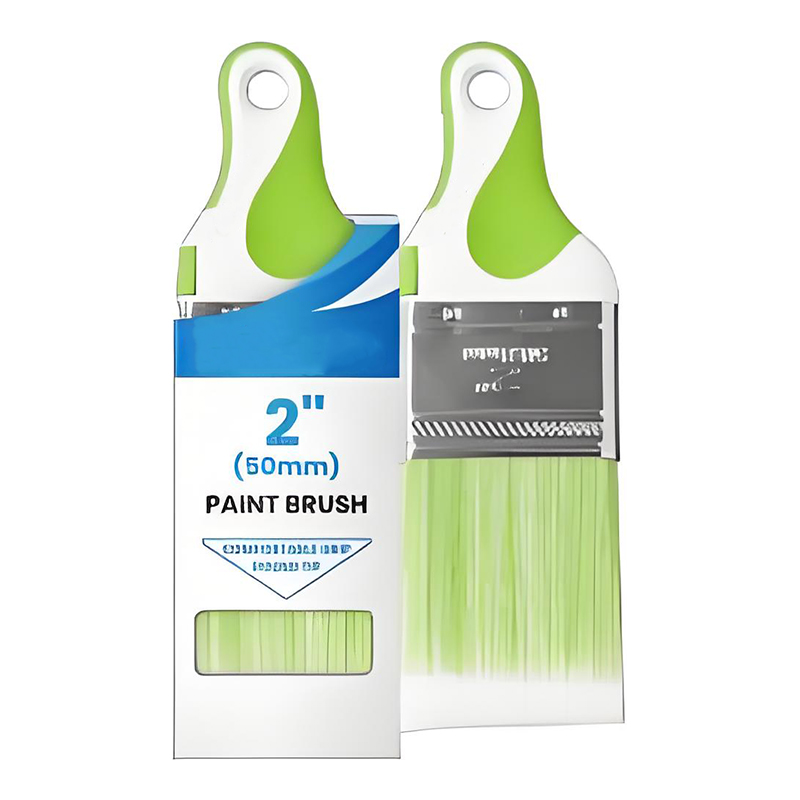
The ferrule is the metal band — typically made from stainless steel, aluminum, or nickel-plated copper — that wraps around the base of the bristle bundle and connects it to the handle of a Handle Paint Brush. It serves as the structural junction between two very different materials: the flexible bristle filaments and the rigid wooden or plastic handle.
Without a properly engineered ferrule, bristles would separate from the handle almost immediately under load. The ferrule performs three critical mechanical functions:
- Compresses and holds the bristle bundle in a fixed cross-sectional shape
- Transfers mechanical force from the handle to the bristles during strokes
- Protects the adhesive bond between bristles and handle from paint, solvent, and moisture infiltration
On a professional-grade Handle Paint Brush, the ferrule is typically seamless rather than seamed. A seamless ferrule has no welded joint that can split under pressure, which is a common failure point on cheaper brushes. Seamless stainless steel ferrules, for example, can endure lateral forces exceeding 15 kg before deforming, compared to seamed versions that may fail at as little as 5–7 kg.
How Crimping Technology Locks Bristles in Place
Crimping is the mechanical process of compressing the ferrule walls inward around the bristle bundle and handle plug. On a well-manufactured Handle Paint Brush, this is done using calibrated hydraulic or pneumatic crimping machines that apply uniform radial pressure at specific points along the ferrule's circumference.
The result is a multi-point clamp that prevents the bristle bundle from rotating, pulling out, or splaying at the base. Most professional Handle Paint Brush models feature double crimping — two separate crimp lines along the ferrule — which distributes clamping force more evenly and significantly reduces localized stress points that could lead to loosening over time.
Crimping Depth and Its Impact on Shedding
Crimping depth matters. Industry testing has shown that ferrules crimped to a depth of 1.2–1.5 mm provide optimal bristle retention without compressing filaments so tightly that they become brittle or misshapen. Under-crimped ferrules — those crimped to less than 0.8 mm — are the leading cause of early bristle shedding in Handle Paint Brush products, particularly during the first 50–100 strokes on abrasive surfaces.
The Role of Adhesive Bonding Inside the Ferrule
Crimping alone is not sufficient to prevent bristle shedding on a Handle Paint Brush used for demanding tasks. High-quality brushes also use an internal adhesive — most commonly an epoxy resin or vulcanized rubber compound — injected into the ferrule cavity before the bristle bundle is inserted.
This adhesive fills the microscopic gaps between individual bristle filaments, creating a matrix that binds them together as a unit rather than as loose individual strands. When the epoxy cures, it forms a rigid plug that effectively acts as a second layer of mechanical retention working in concert with the crimp.
The type of adhesive used has a significant impact on performance under different conditions:
| Adhesive Type | Heat Resistance | Solvent Resistance | Best Use Case |
|---|---|---|---|
| Epoxy Resin | Up to 120°C | High | Oil-based paints, solvents |
| Vulcanized Rubber | Up to 80°C | Moderate | Water-based latex paints |
| PVA Glue | Up to 60°C | Low | Light-duty hobby use only |
For heavy-duty painting with solvent-based coatings, epoxy resin adhesive is the clear choice, as it maintains structural integrity even when the ferrule is repeatedly submerged in mineral spirits or acetone during cleaning cycles.
Handle-to-Ferrule Fit: Why Precision Matters
The connection between the ferrule and the handle of a Handle Paint Brush is just as important as the bristle-to-ferrule connection. If the handle plug inside the ferrule has any play or looseness, it creates micro-movements that gradually weaken the adhesive bond and accelerate bristle shedding — even if the bristle crimp itself is perfectly executed.
Premium Handle Paint Brush manufacturers machine or mold their handles to tolerances of ±0.1 mm to ensure a press-fit connection with the ferrule. Some models also use a tapered handle plug that wedges more tightly into the ferrule as the brush is used under pressure, which is a self-tightening design that actually improves retention over time.
Wooden vs. Plastic Handles and Their Effect on Ferrule Stability
Handle material directly affects how well the ferrule maintains its grip on a Handle Paint Brush:
- Hardwood handles (beech, birch) offer firm compression and minimal swelling, making them reliable for professional use when properly sealed
- Unsealed softwood handles absorb water and swell, which can temporarily tighten the ferrule but ultimately causes wood fiber breakdown and loosening after repeated wet-dry cycles
- Polypropylene or ABS plastic handles offer dimensional stability across moisture and temperature changes, making them increasingly preferred for industrial-grade Handle Paint Brush products
Heavy-Duty Painting Conditions That Stress the Ferrule Connection
Not all painting tasks apply equal stress to the ferrule of a Handle Paint Brush. The following conditions are particularly demanding and require a brush with a robust ferrule system:
- Dry-brushing on textured surfaces — Minimal paint load with high contact pressure causes the bristle bundle to splay repeatedly, straining the ferrule's crimp.
- Stippling or pouncing techniques — Repeated perpendicular impact forces are transmitted directly to the ferrule junction.
- Using thick masonry primers — High-viscosity coatings require greater drag force per stroke, increasing lateral stress on the bristle-ferrule bond.
- Extended continuous use exceeding 4 hours — Cumulative mechanical fatigue can weaken adhesive bonds that were borderline acceptable at the time of manufacture.
- Frequent solvent cleaning — Aggressive solvents like lacquer thinner can degrade lower-grade adhesives inside the ferrule within 20–30 cleaning cycles.
For these conditions, users should specifically look for a Handle Paint Brush with a stainless steel seamless ferrule, double crimp, and epoxy resin bonding — these three features together represent the current industry benchmark for professional-grade bristle retention.
Maintenance Practices That Preserve the Ferrule Connection
Even the best-engineered Handle Paint Brush ferrule can be compromised by improper maintenance. The following practices will help users protect the ferrule connection and prevent premature bristle shedding:
- Never soak a Handle Paint Brush bristle-end down in solvent for more than 30 minutes — prolonged immersion degrades adhesive bonds and can cause the handle to swell into the ferrule unevenly
- Always clean paint from inside the ferrule collar after each use — dried paint accumulation inside the ferrule creates outward pressure that gradually splits the crimp
- Store the Handle Paint Brush horizontally or hanging bristle-down — never rest it on the bristle tips, which bends filaments and transfers weight stress to the ferrule edge
- Inspect the ferrule seam (if present) regularly for cracking or lifting, which is an early warning sign of imminent bristle loosening
- Reshape the bristle bundle with a brush comb after cleaning to prevent asymmetric drying that stresses one side of the ferrule more than the other
Proper maintenance can extend the functional lifespan of a Handle Paint Brush ferrule connection by 2–3 times compared to a brush that is cleaned and stored carelessly, making it one of the highest-return investments a professional painter or serious DIYer can make.