English
 Español

1. Threaded Twist-Lock Mechanism
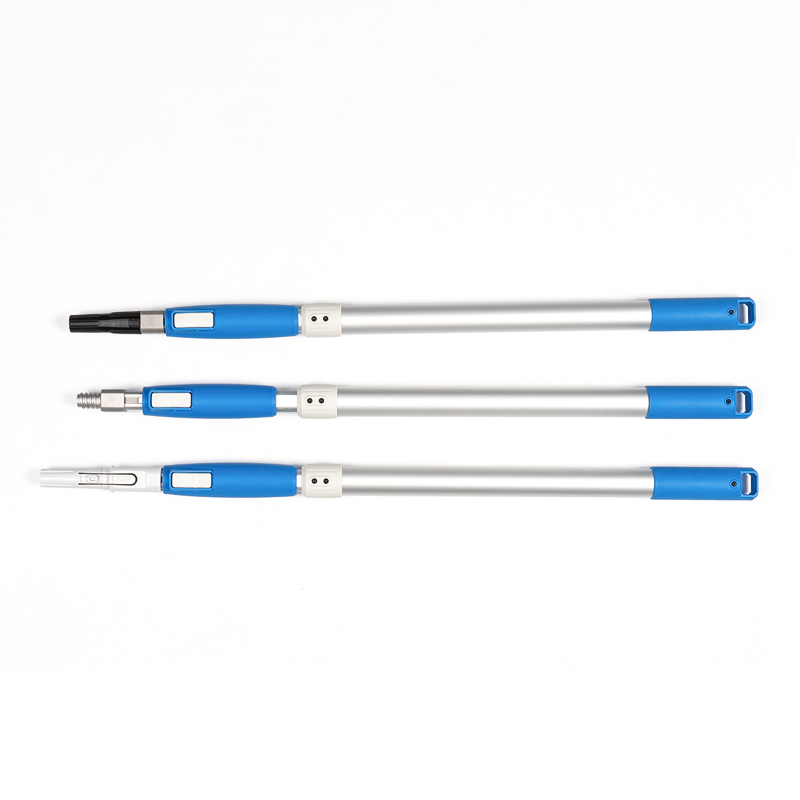
Many Telescopic Paint Roller Frames employ a threaded twist-lock system, where the inner and outer poles feature precision-machined threads that interlock when rotated. By twisting the sections into position, the user creates friction and mechanical engagement between the mating surfaces, which firmly secures the roller at the desired extension length. This friction-based approach ensures that the pole does not collapse or slip under the weight of the roller, applied downward pressure, or lateral forces encountered during painting. The threaded interface is engineered to provide consistent grip over repeated use, allowing the operator to maintain steady contact with walls, ceilings, or other high surfaces without wobble, deflection, or loss of control.
2. Cam or Lever Lock Systems
Advanced Telescopic Paint Roller Frames may incorporate cam or lever-style locking mechanisms, which use a pivoting or spring-loaded clamp to press the inner pole against the outer sleeve. When the lever or cam is engaged, it produces a strong clamping force that instantly secures the extension in place. This type of lock distributes pressure evenly across the contact surface, ensuring a secure hold at both full extension and intermediate lengths. Lever and cam systems also allow rapid adjustments without the need for repeated twisting, enhancing efficiency for painters who need to change extension length frequently during a project.
3. Multiple Contact Points for Enhanced Stability
High-quality telescopic roller frames often feature multiple contact or locking points along the inner and outer poles. These additional contact surfaces increase the effective friction area and reduce torsional play or twisting under pressure. By distributing the locking force across several points, the mechanism resists lateral movement and bending, which ensures that the roller maintains uniform contact with the painting surface. This multi-point design is particularly beneficial for longer extensions or when using heavier roller covers, as it enhances rigidity and improves control during vertical or overhead applications.
4. Material Selection and Surface Engineering
The performance of the locking mechanism is also highly dependent on the materials and surface treatments used. Poles are typically constructed from lightweight yet strong materials such as anodized aluminum, powder-coated steel, or reinforced composites. Surface textures, such as knurled or rubberized collars, increase friction and improve grip when engaging the lock. These engineered surfaces prevent slippage and enhance the durability of the locking mechanism over repeated cycles. Additionally, corrosion-resistant coatings help maintain consistent performance in humid or paint-splattered environments, ensuring long-term reliability.
5. Stability Under Load
A well-designed locking system maintains rigidity even when the roller is subjected to significant downward or lateral pressure. The combination of friction, mechanical engagement, and secure contact points ensures that the inner pole does not slide back, tilt, or wobble while painting. This stability is essential for producing even, consistent paint coverage, minimizing roller streaks or uneven application, and providing the user with precise control. The locking mechanism effectively converts the extended pole into a stable, rigid tool capable of handling high-demand tasks safely.