English
 Español

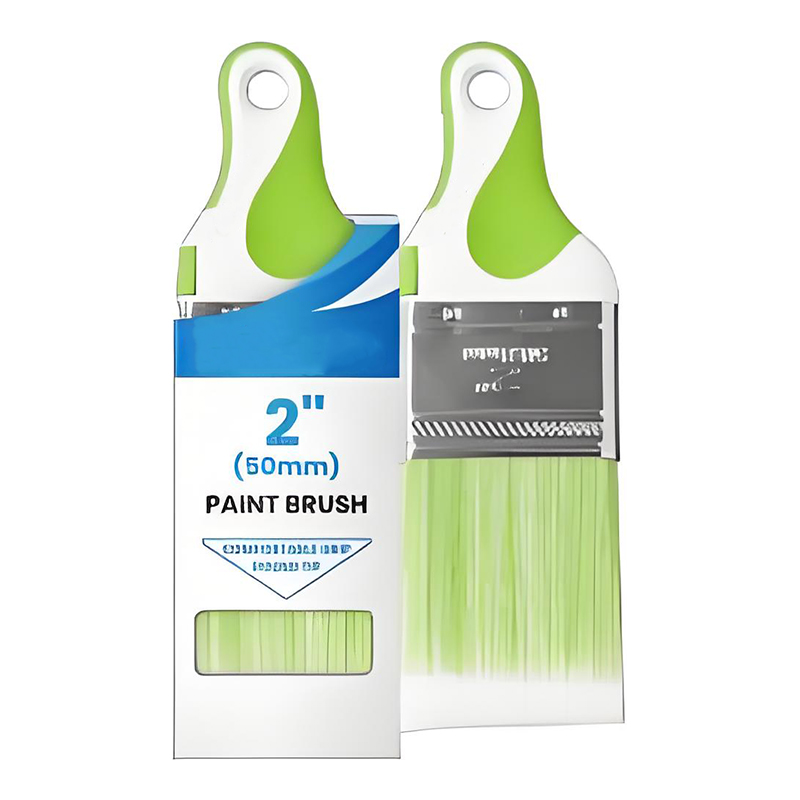
The bristle density of a Plastic Handle Paint Brush directly determines how much paint the brush can hold, how evenly it releases that paint, and how many strokes you can complete before re-dipping. In short: higher bristle density equals greater paint loading capacity — but the relationship is more nuanced than a simple equation. Understanding this dynamic helps painters choose the right brush for the right job, reducing waste, saving time, and improving finish quality.
What Bristle Density Actually Means
Bristle density refers to the number of individual bristle filaments packed into the ferrule of a Plastic Handle Paint Brush. A denser brush contains more filaments within the same ferrule width, creating more surface area and more inter-bristle space — the microscopic gaps between filaments where paint is stored and transported.
It is important to distinguish bristle density from bristle count alone. Two brushes with the same number of filaments can have very different densities depending on how the bristles are arranged, whether they are flagged (split at the tips), or how tightly they are bound within the ferrule. A 2-inch Plastic Handle Paint Brush with high density may contain 400–600 individual filaments, while a low-density equivalent of the same width may hold fewer than 250.
The Direct Relationship Between Density and Paint Loading
Paint loading capacity is governed primarily by capillary action — the ability of narrow inter-bristle channels to draw and retain liquid. In a Plastic Handle Paint Brush, denser bristle packing creates more and finer capillary channels, which increases the total volume of paint held between strokes.
Here is how density levels translate into practical performance:
| Bristle Density | Paint Loading Capacity | Best Application | Typical Stroke Coverage |
|---|---|---|---|
| Low Density | Low — frequent re-dipping needed | Detail work, thin coatings | 6–10 inches per load |
| Medium Density | Moderate — balanced flow and control | General wall painting, trim | 12–18 inches per load |
| High Density | High — extended strokes without re-dipping | Large surfaces, thick coatings | 24–36 inches per load |
A high-density Plastic Handle Paint Brush can hold up to 40% more paint by volume compared to a low-density version of the same brush width. This means fewer interruptions, more consistent paint delivery, and smoother overall coverage on large surfaces.
How Paint Type Interacts With Bristle Density
The effectiveness of bristle density is not independent — it interacts strongly with the type of paint being used. Not every dense Plastic Handle Paint Brush performs optimally with every coating.
Water-Based and Latex Paints
These paints have lower viscosity and flow more freely. A high-density Plastic Handle Paint Brush works exceptionally well here because the tight bristle channels hold the thinner paint without excessive dripping. The capillary retention prevents premature paint release, giving the user better control on vertical surfaces such as walls and doors.
Oil-Based Paints and Alkyd Coatings
Oil-based paints are thicker and more viscous. With a very high-density Plastic Handle Paint Brush, the bristles may hold too much paint and deliver an uneven, heavy coat. A medium-density brush is generally preferred for oil-based applications, as it balances capacity with controlled, uniform release.
Specialty Coatings (Varnishes, Stains, Primers)
Stains and varnishes require precise, thin application. Here, a low-to-medium density Plastic Handle Paint Brush provides just enough loading capacity without the risk of overloading and causing drips or uneven penetration into wood grain or porous surfaces.
Paint Release Rate: Density Is Only Half the Story
Loading capacity describes how much paint a Plastic Handle Paint Brush holds — but paint release rate describes how consistently and smoothly that paint transfers to the surface. High bristle density slows the release rate, which is beneficial for controlled applications but can be a drawback when you need fast, fluid coverage.
Factors that affect release rate alongside density include:
- Bristle stiffness: Stiffer filaments in a Plastic Handle Paint Brush release paint more forcefully with each stroke, compensating for high density in thick-coat applications.
- Tip flagging: Bristles that are split or frayed at the ends create micro-channels that accelerate paint flow, improving release even in dense brushes.
- Brush pressure: Applied force bends the bristles, compressing the inter-bristle channels and pushing paint out faster regardless of density level.
- Ferrule design: A wider, flatter ferrule distributes bristles more evenly, creating more uniform capillary channels and more consistent paint delivery across the full brush width.
Practical Consequences for Painting Efficiency
Understanding bristle density in your Plastic Handle Paint Brush has real-world implications for how efficiently a job gets done.
- Reduced re-dipping frequency: A high-density Plastic Handle Paint Brush can cut re-dipping frequency by up to 50% on large flat surfaces, saving significant time on projects covering 100 square feet or more.
- More consistent film thickness: Dense brushes deliver a more even paint film, reducing the likelihood of thin spots or visible brush marks that require touch-ups.
- Less paint waste: Because paint is stored more efficiently between bristles, less paint is left behind in the brush or lost to dripping compared to sparse bristle configurations.
- Fatigue reduction: Fewer dips and more continuous stroke capability mean the user exerts less repetitive motion, which matters especially on multi-hour professional jobs.
Choosing the Right Bristle Density for Your Plastic Handle Paint Brush
There is no universal "best" density — the ideal choice depends on your specific task. Use the following guide to match bristle density to application type:
- Large surface coverage (walls, ceilings, fences): Choose a high-density Plastic Handle Paint Brush, ideally 3–4 inches wide, to maximize loading and minimize interruptions.
- Trim, molding, and edges: A medium-density Plastic Handle Paint Brush in a 1.5–2 inch size gives you precision without overloading — critical for clean cut-in lines.
- Detailed or decorative work: Use a low-density Plastic Handle Paint Brush with a fine, tapered tip for lettering, stencils, or intricate designs where excess paint would blur edges.
- Thick coatings or masonry paints: Medium density is preferred — high density may trap thick paint too deeply in the bristles, making full release difficult and cleaning harder afterward.
When evaluating a Plastic Handle Paint Brush at point of purchase, press the bristles gently against your palm. A well-densified brush should spring back firmly with no noticeable gaps or splaying — a sign that bristle packing is tight and consistent throughout the ferrule.
Maintaining Bristle Density Over Time
A Plastic Handle Paint Brush loses effective bristle density over time if not properly maintained. Bristle splaying, clumping, and matting all reduce the number of active capillary channels, directly lowering paint loading capacity — even if no individual bristles have been shed.
To preserve bristle density and extend brush performance:
- Clean the Plastic Handle Paint Brush thoroughly after every use with the appropriate solvent — water for latex paints, mineral spirits for oil-based coatings.
- Reshape the bristles into their original form while still damp and store the brush hanging or lying flat — never resting on the bristle tips.
- Use a brush comb after cleaning to realign filaments and restore uniform spacing within the bristle bundle.
- Avoid leaving the Plastic Handle Paint Brush soaking in solvent for more than 30 minutes, as prolonged immersion can loosen the ferrule crimp and allow bristle spreading.
With proper care, a quality high-density Plastic Handle Paint Brush can maintain its original loading capacity across 50 or more uses, making it a cost-effective tool for both professional painters and dedicated DIY users.